
 Jared Mason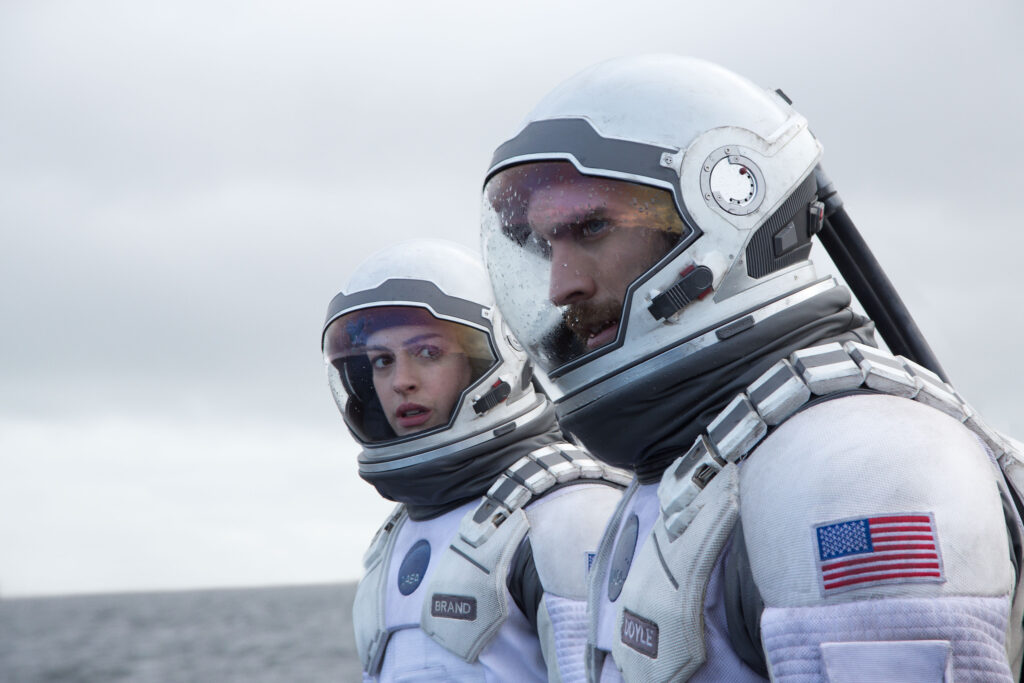
Why Scientific Accuracy in Sci-Fi Still Matters
Science fiction has always been a realm of imagination – faster-than-light travel, alien languages, teleportation, sentient robots who cry. It’s a genre built on “what if?” But not all sci-fi needs to throw physics out the airlock. Some filmmakers actually respect the laws of nature, or at least flirt with them before slipping into theoretical territory.
In an age where misinformation spreads faster than warp drive, it’s oddly comforting to know that some stories strive for truth. Whether it’s a stranded botanist on Mars doing math with potatoes or astronauts sweating over CO₂ scrubbers, these films weave real science into compelling fiction. They don’t just make us dream, they make us think.
This list celebrates the 15 most scientifically accurate sci-fi films, ranked from hard science triumphs to (slightly) speculative masterpieces. We’ll dive into how each film integrates science, what it gets right (and wrong), and how audiences – and actual scientists – reacted.
Because when science fiction is done right, it doesn’t just entertain.
It educates. It warns. It inspires.
1. The Martian (2015)
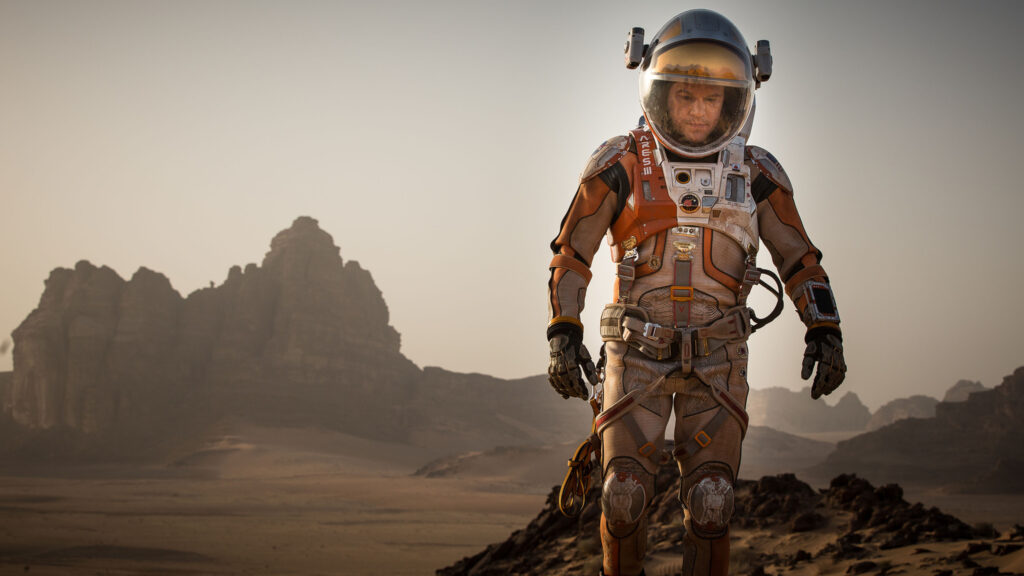
When astronaut and botanist Mark Watney is accidentally left behind on Mars during a mission abort, he’s forced to survive with ingenuity, duct tape, and science. The story is less about aliens and more about engineering, problem-solving, and the triumph of human resourcefulness. Watney’s survival hinges on realistic applications of botany (growing potatoes with human waste), chemistry (creating water from hydrogen), and mechanical repair. The film integrates orbital physics and project planning on Earth with high fidelity. NASA collaborated closely on the script, and many scientists hailed it as one of the most accurate space films ever made. Critics praised its uplifting tone, and audiences loved that science – for once – was the hero. Only real inaccuracy? Martian storms don’t have enough atmospheric pressure to knock over equipment. Still, it’s a love letter to STEM wrapped in a blockbuster.
2. Apollo 13 (1995)
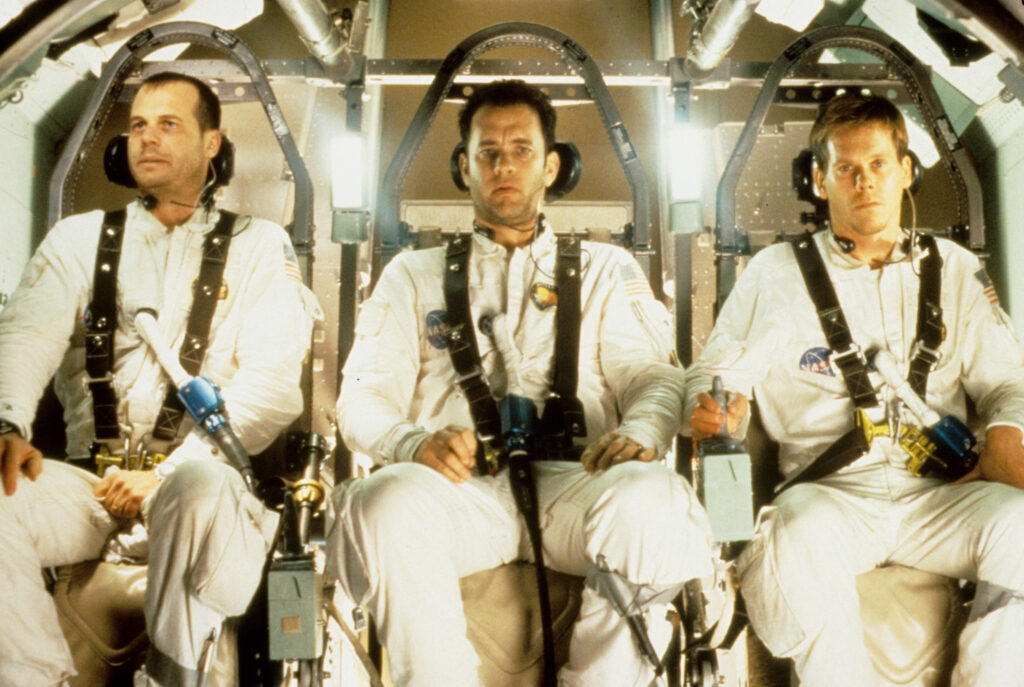
Based on the harrowing true story of NASA’s ill-fated third lunar landing mission, Apollo 13 chronicles the moment when a routine spaceflight turned into a desperate fight for survival. After an oxygen tank explodes en route to the moon, the astronauts and mission control must work together to improvise life-saving solutions on the fly. Every decision – from power conservation to improvised CO₂ scrubbers – is grounded in historical reality. The film gets top marks for scientific and procedural accuracy, with much of the dialogue lifted directly from real communications. The performances (especially Ed Harris as Gene Kranz) highlight the emotional intensity behind the technical brilliance. It’s often used in classrooms as a case study in crisis engineering and teamwork. The only “fiction” here is the tension-boosting music cues. This is reality cinema with the heart of a thriller.
3. Contact (1997)
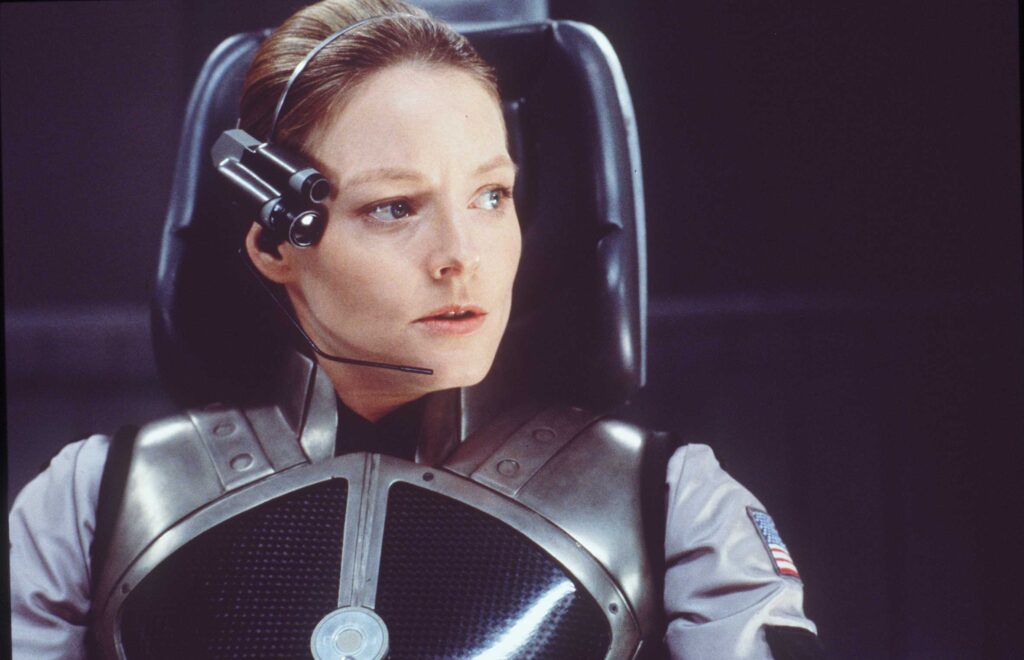
Adapted from Carl Sagan’s novel, Contact follows radio astronomer Ellie Arroway as she discovers the first confirmed signal from intelligent extraterrestrial life. The plot explores how such a discovery would challenge our scientific institutions, politics, religion, and our own perception of humanity. The film’s science is meticulously grounded: the alien signal arrives via encoded prime numbers, using radio frequencies plausible for interstellar communication. The decoding and construction of the alien machine are treated with realism and reverence for the scientific method. What’s more, the film asks bold philosophical questions without abandoning logic. The ending flirts with metaphysics but never breaks credibility. Foster’s performance as a passionate, driven scientist gives the film its emotional center. While some critics wanted more spectacle, most praised its mature, measured tone. It’s one of the few sci-fi films that makes science feel spiritual – without turning it into magic.
4. Gattaca (1997)

In a near-future society dominated by genetic profiling, Gattaca follows Vincent Freeman, a “naturally born” man who defies a genetically engineered caste system by assuming the identity of a genetically perfect elite. The story explores ethics, discrimination, and human potential in a world where DNA determines your destiny. The science of gene editing and pre-implantation selection is chillingly plausible, mirroring real-world debates about CRISPR and designer babies. Everything from security protocols (urine tests, eyelash scanning) to occupational barriers reflects a world ruled by genetic determinism. While it simplifies the nature vs. nurture debate, it does so in the service of a profound question: are we more than our code? Critics lauded its aesthetics and moral clarity. Though modest at the box office, it gained a cult following and remains a key film in bioethics education today.
5. Moon (2009)
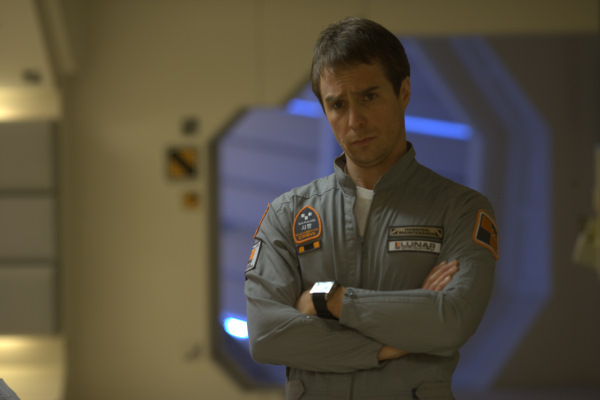
Set in the not-so-distant future, Moon centers on Sam Bell, the lone worker on a lunar mining base harvesting helium-3 to fuel Earth’s energy needs. As his three-year tour nears its end, Sam begins to experience hallucinations and health issues, leading to a shocking discovery about his identity. The film subtly integrates science without exposition dumps: the lunar base is grounded in practical industrial design, the mining process is based on real-world helium-3 theories, and the psychological toll of space isolation is realistically portrayed. The AI assistant GERTY, voiced with calm efficiency by Kevin Spacey, is plausible and restrained, not godlike or homicidal. The central speculative element – cloning – is handled with maturity, raising questions about labor, ethics, and humanity. Critics praised its minimalist storytelling and Rockwell’s dual performance. It’s smart, eerie, and deeply human, all without explosions or aliens.
6. Europa Report (2013)
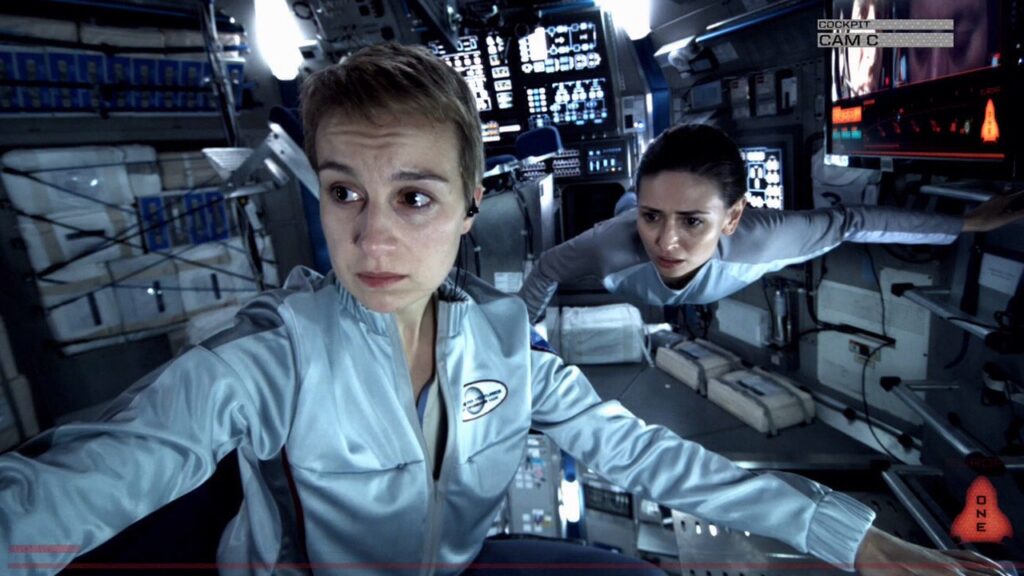
Told in a documentary-style format, Europa Report chronicles a private space mission to Jupiter’s icy moon Europa to search for signs of life beneath its frozen crust. When disaster strikes, the crew must weigh personal risk against the mission’s scientific importance. The film excels in realism: the mission architecture, communication delays, spacewalk procedures, and radiation dangers are all accurate. Even the logic behind Europa as a target – a subsurface ocean heated by tidal forces – mirrors current NASA astrobiology theories. What separates it from flashier sci-fi is its reverence for the scientific method: there are no villains, no politics, just exploration and consequence. The ending is speculative but grounded, offering a plausible first contact scenario. Though modest in budget and release, it’s beloved by science communicators and praised for capturing the spirit of real exploration.
7. Interstellar (2014)
Interstellar begins with a dying Earth and ends with love transcending time – but in between lies some of the most scientifically rigorous space travel ever put on screen. The film follows Cooper, a former pilot who joins a secret NASA mission to find a habitable planet via a wormhole near Saturn. Guided by physicist Kip Thorne, the film gets relativity right: time dilation near a massive black hole (Gargantua) is stunningly visualized and accurately modeled. The use of tesseracts, wormholes, and gravitational lensing pushes boundaries while respecting physics. The plot stretches in the final act (love as a dimension, anyone?), but the emotional stakes remain human. Critics praised its ambition and spectacle; scientists admired its accuracy, even publishing papers about it. Despite a few eye-rolls over the climax, it’s one of the rare blockbusters that makes space and science feel truly epic.
8. Ex Machina (2014)
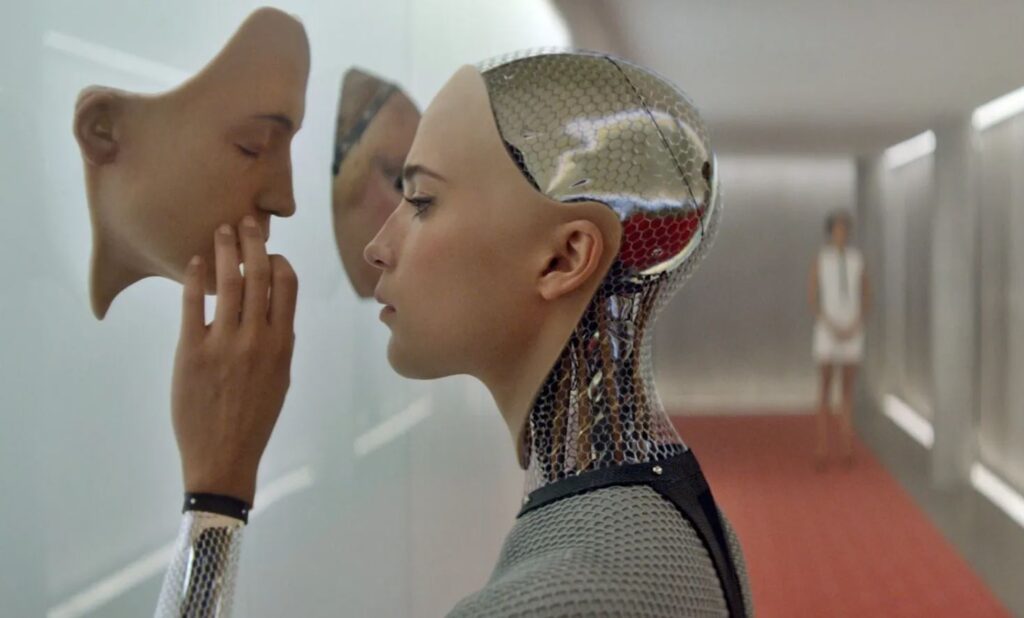
A young programmer, Caleb, is invited to the remote estate of reclusive tech billionaire Nathan to evaluate Ava – a humanoid AI with extraordinary emotional intelligence. What begins as a Turing Test becomes a psychological power struggle. Ex Machina is claustrophobic and cerebral, exploring themes of control, objectification, and emergent intelligence. The science is speculative but grounded: Ava’s consciousness is trained on massive datasets – like modern large language models – and her manipulation tactics are chillingly human. The film doesn’t rely on sci-fi tropes like omniscience or instant cognition; instead, it focuses on the gray zone between imitation and self-awareness. It’s sleek, sparse, and philosophical. Critics loved its intelligence and visual minimalism, and it remains one of the most discussed films in AI ethics. The most frightening thing? Ava isn’t malevolent – she’s just surviving.
9. 2001: A Space Odyssey (1968)
Kubrick’s space epic spans from early hominids discovering tools to astronauts encountering a mysterious alien monolith near Jupiter. It’s a slow, meditative journey into evolution, intelligence, and the unknown. The film’s depiction of space travel was decades ahead of its time: rotating habitats to simulate gravity, silence in space, realistic docking sequences – all scientifically plausible. HAL 9000, the ship’s AI, remains the gold standard for cold logic turned lethal due to contradictory commands. While the final act embraces surrealism, the first two-thirds are textbook accurate. Collaborating with author Arthur C. Clarke, Kubrick ensured every frame felt authentic. It was divisive upon release but is now considered one of the most influential films ever made. For anyone who’s ever looked up at the stars and felt both awe and unease, 2001 delivers.
10. Arrival (2016)
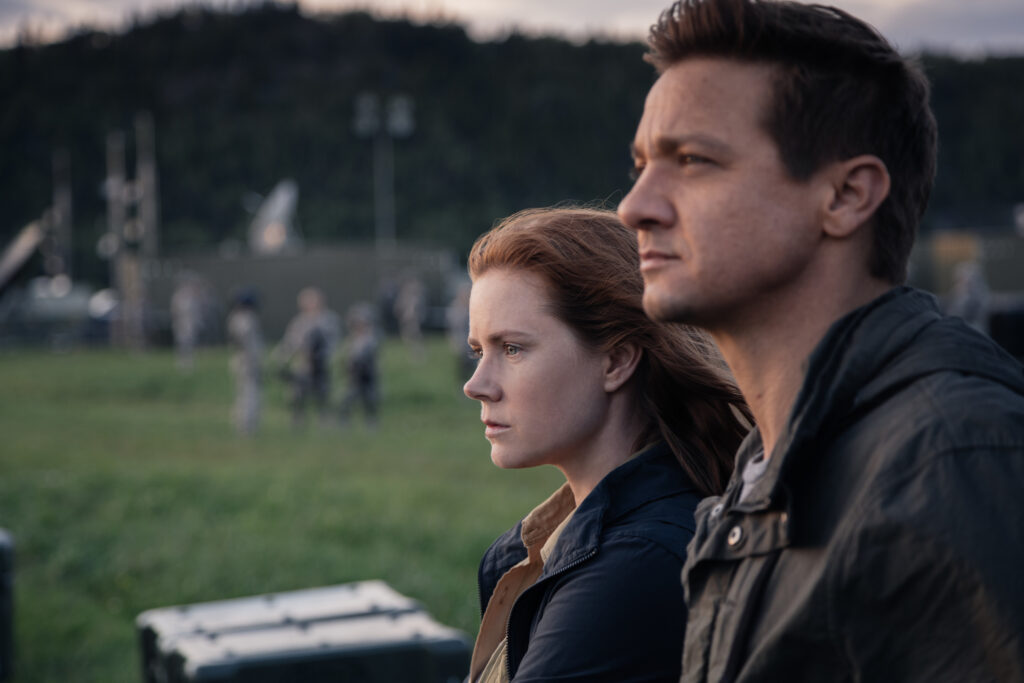
When twelve alien ships arrive across the globe, linguist Louise Banks is recruited to establish communication. But the deeper she delves into their language, the more her perception of time begins to shift. Arrival is unique in its focus: not war, not exploration, but language – and how it shapes thought. The film integrates the Sapir-Whorf hypothesis, which suggests language can influence cognition. While the concept is exaggerated (Louise begins to experience time nonlinearly), it’s used metaphorically rather than literally. The scientific procedures – from establishing lexicons to managing international cooperation – are respectful and believable. Critics praised its emotional intelligence, and it won an Oscar for sound. Audiences expecting explosions got introspection instead. It’s not about aliens visiting us – it’s about us learning to understand ourselves.
11. Gravity (2013)
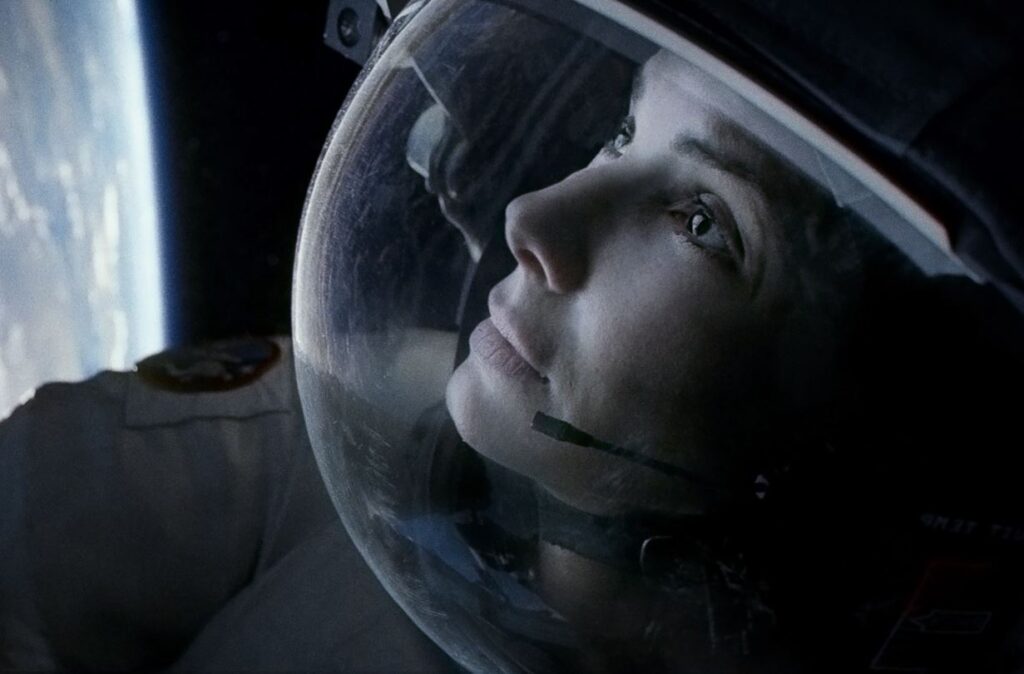
After a debris cloud destroys her shuttle, astronaut Ryan Stone is left tumbling alone in orbit. What follows is a tense, minimalist survival story against the vast indifference of space. The film gets many things right: the silence of space, realistic zero-G movement, and the potential cascading disaster of the Kessler Syndrome. Sandra Bullock’s performance captures the terror of isolation and the drive to live. Where it falters is in orbital mechanics – hopping from the Hubble to the ISS to Tiangong in minutes is orbital fantasy. But the visual realism, down to how tears float or how fire behaves in microgravity, is exceptional. Critics and audiences were floored by the experience. While the story is simple, its commitment to visual and physical authenticity is anything but.
12. Ad Astra (2019)
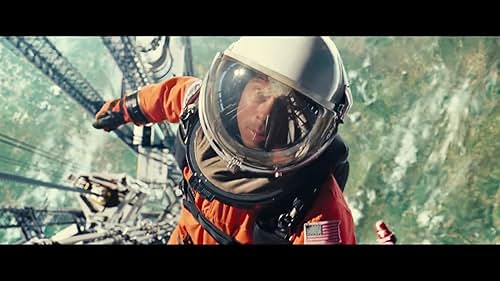
Roy McBride, an emotionally restrained astronaut, travels from Earth to Neptune to locate his estranged father, whose failed experiment is endangering the solar system. Ad Astra is Heart of Darkness in space – slow, contemplative, and existential. The film’s depiction of lunar colonies, Mars outposts, and long-haul space travel is deeply grounded in engineering and social realities. The psychological toll of isolation is its real subject. While the central crisis (an energy surge from Neptune) is scientifically shaky, the film avoids typical space-opera tropes. It’s not about conquering the stars – it’s about confronting absence, memory, and what we inherit from those who came before us. Critics praised its visuals and ambition, though some found the pace glacial. Still, it’s a beautifully restrained vision of plausible space travel.
13. Sunshine (2007)
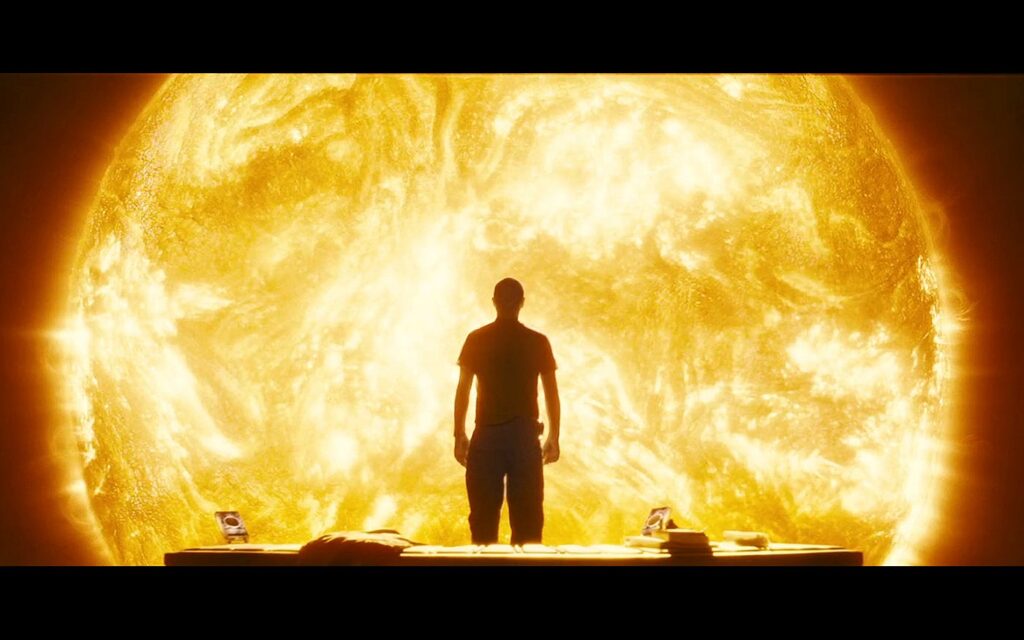
In the mid-21st century, the Sun is dying, and humanity’s last hope is the Icarus II – a ship carrying a nuclear payload to reignite it. For two-thirds of the film, Sunshine is a brilliant, tension-filled space drama. The science around solar observation, oxygen conservation, and human error is strong. The set design is utilitarian, the ship’s systems are logical, and the psychological pressures are real. Unfortunately, the film takes a sharp left turn into slasher horror in its final act, abandoning realism for adrenaline. Still, what it gets right it gets very right. It’s visually gorgeous, emotionally raw, and mostly grounded in real astrophysics until it isn’t. A flawed gem.
14. Coherence (2013)

At a dinner party during a comet’s close pass, eight friends experience strange phenomena – phones don’t work, power fluctuates, and strangers look just like them. Coherence explores the quantum concept of decoherence and branching realities with no effects and a tiny budget. The science is speculative but based in real theory: small disruptions can create divergent realities. What the film nails is the emotional chaos of realizing your reality isn’t stable. The characters are normal people – no scientists, no exposition – which makes the unraveling even more terrifying. Critics loved its ingenuity and tight storytelling. It’s a mind-bender that stays with you, even if it never fully explains itself.
15. Primer (2004)
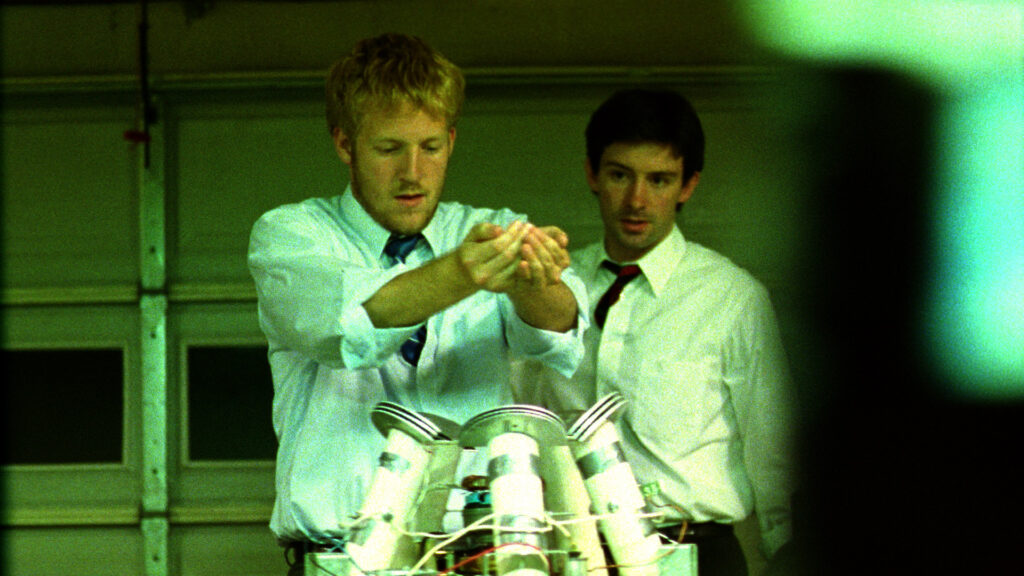
Two engineers accidentally invent a time machine in their garage and quickly descend into paranoia, secrecy, and existential confusion. Primer is the most “engineering” film ever made: characters speak in jargon, the machine is a mess of wires and insulation, and the time travel logic is painfully consistent. It doesn’t dumb down anything. The plot demands flowcharts and second viewings, but it rewards attention. Time travel itself is still theoretical, of course, but Primer treats it with a seriousness no other film does. It’s confusing, brilliant, and utterly uncompromising. A masterclass in speculative realism on a shoestring budget.
What These Films Teach Us About Truth in Fiction
At its best, science fiction isn’t about gadgets, explosions, or aliens with suspiciously human abs – it’s about ideas. The best scientifically accurate sci-fi films take those ideas seriously. They ask, “What would really happen if…?” and then work through the answer using the best knowledge we have.
These movies may differ in tone – from quiet philosophical inquiries to pulse-pounding survival stories – but they all treat science not as a plot crutch, but as a character in the story. And in doing so, they remind us that science itself is dramatic, emotional, terrifying, and sometimes beautiful.
Could Hollywood stand to take a few more physics classes? Absolutely. But for every film that treats space like an underwater theme park, there’s one that brings the stars – and the science – back down to Earth.
So whether you’re a hardcore physicist or a curious dreamer, these 15 films prove you don’t have to choose between realism and wonder. With the right story, you can have both.


About the Author

 Alonzo Villarreal
 Imani King

 Jaded Emperor
 Derek Kersey
 Kamiko Hiroki
 Jamaal Robison