Re:Zero Season 3 Review: Subaru’s Hell Never Ends—And That’s the Point
 Jamaal Robison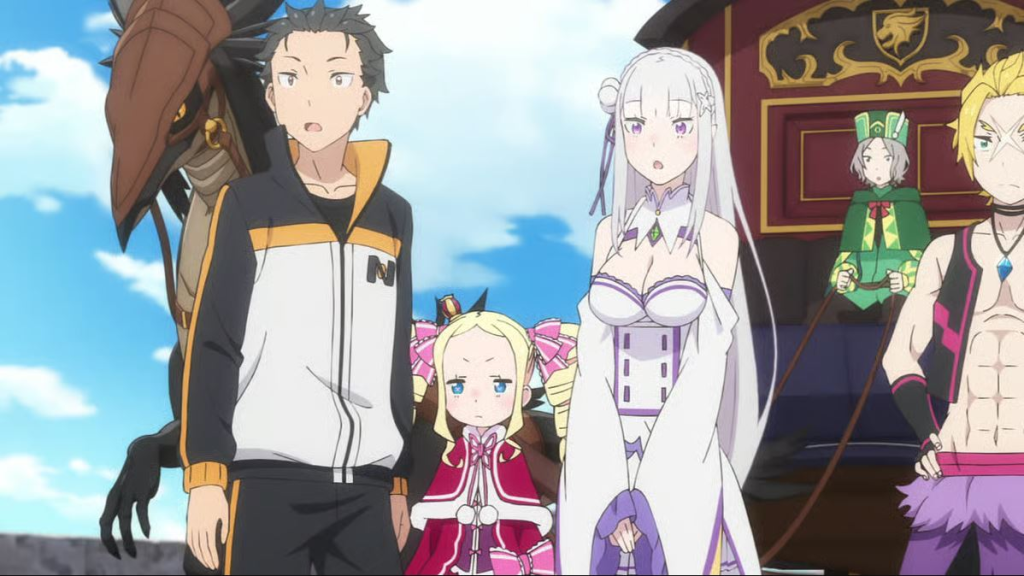
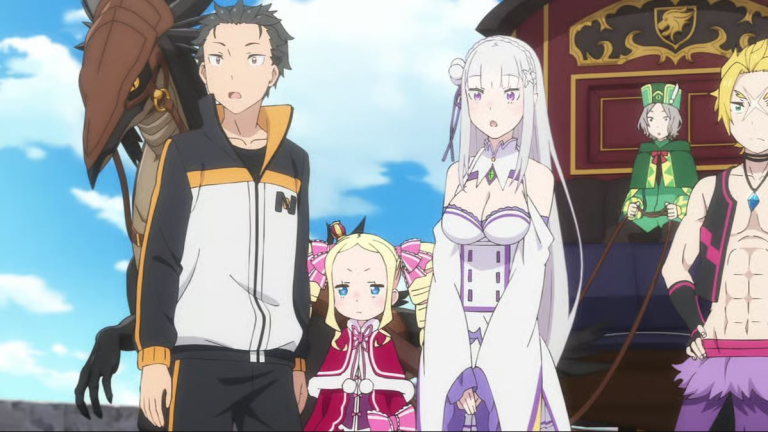
Re:Zero Season 3 Review: Subaru and Emilia rise to the occasion
After a long and agonizing wait, Re:Zero − Starting Life in Another World returns with its third season—and, true to form, it delivers an emotional sledgehammer wrapped in time loops, death flags, and brutal character progression. Season 3 picks up the scattered remains of Subaru Natsuki’s sanity and dares to push him further into the abyss—only this time, he’s not alone. With deeper lore, a sharper narrative focus, and studio White Fox pulling no punches on the animation front, Re:Zero S3 is not just a continuation—it’s a crucible.
New Kingdom, Old Nightmares
Season 3 adapts Arc 5 of the light novel series, plunging Subaru and company into the volatile city of Pristella, also known as the “Water Gate City.” The Witch Cult rears its many grotesque heads again, this time with several Sin Archbishops making their terrifying debut. Unlike the more isolated trials of earlier arcs, Arc 5 is a full-scale warzone—political, magical, and psychological.
Subaru, Emilia, Beatrice, Ram, and others must cooperate with rival royal selection candidates to defend the city. Yes, cooperate. Meaning people who hated each other must now somehow not implode before the city does.
This shift gives the season a Game of Thrones-esque political tension while maintaining the series’ trademark gut-wrenching stakes.
Subaru and the Burden of Progress
One of the biggest strengths of Re:Zero Season 3 is its unflinching focus on growth through pain—not suffering for suffering’s sake, but transformation. Subaru continues to mature, no longer throwing himself into every death recklessly. He’s learning how to delegate, how to lead, and—perhaps most tragically—how to hold back when that’s the harder choice.
Emilia, too, begins to emerge as more than just the “nice girl” protagonist. Her interactions with rival factions show a newfound political intelligence, hinting at the queen she could one day become.
And then there’s Beatrice, who shifts from cryptic recluse to one of the season’s emotional anchors. Her loyalty to Subaru, shown not just in word but in high-stakes action, is one of the season’s best payoffs.
New characters like Capella, the Sin Archbishop of Lust, are grotesque, unpredictable, and deeply unsettling. The Archbishops feel less like “villains of the week” and more like existential threats, each embodying twisted philosophies that force our protagonists to reflect on their own.
White Fox Delivers Again
White Fox continues to prove that Re:Zero is one of its crown jewels. The action scenes in Pristella are fluid, chaotic, and brimming with tension. Each of the Archbishops’ powers is animated with grotesque flair, making their mere presence feel viscerally wrong.
The score by Kenichiro Suehiro is a highlight again, using silence and dissonance with the same precision as its swelling orchestral peaks. There’s one sequence late in the season—no spoilers—where the music stops entirely for a full 20 seconds. The tension is unbearable. And brilliant.
Memory, Identity, and Shared Trauma
Season 3 doubles down on the philosophical horror that made Re:Zero stand out in a sea of isekai clones. This time, the focus shifts from Subaru’s personal trauma to shared trauma—how entire communities and factions reckon with loss, betrayal, and survival.
There’s a recurring motif of memory manipulation, and what happens when your mind is no longer a safe space. If Season 1 asked “How far will Subaru go to save someone?”, and Season 2 asked “What is Subaru willing to lose to grow?”, then Season 3 asks, “How do you save people who don’t even remember themselves?”
A Mixed Bag?
One criticism that may hold for some viewers is the breakneck pacing. Unlike Arc 4, which was more introspective and character-driven, Arc 5 moves fast. There’s less time for quiet reflection and more time for strategy, fights, and ever-shifting allegiances. While fans of political drama and tactical warfare will love this, those hoping for extended emotional monologues might feel whiplashed.
Still, the emotional core is never lost—just condensed.
Fan Reception and Community Buzz
Initial fan response has been overwhelmingly positive. Reddit threads and Twitter feeds lit up weekly with theories, fanart, and emotional breakdowns. The long wait between seasons seems to have paid off, with audiences praising the complexity of the plot and the maturity of Subaru’s character arc.
Critics have called it “one of the most ambitious arcs in modern isekai” and “the emotional payoff fans deserve.” Even longtime skeptics of the genre admit that Re:Zero remains in a league of its own.
Final Verdict: 9/10
Season 3 of Re:Zero is raw, risky, and relentless. It drags its characters through political upheaval, moral ambiguity, and spiritual horror—and somehow emerges not as bleak, but as hopeful. That’s the magic of the series. It doesn’t promise survival without pain. It promises that, despite it all, you can still choose to move forward.
If you’ve followed Subaru this far, Season 3 rewards your loyalty with one of the most complex, harrowing, and satisfying arcs yet. And if you haven’t? Now’s the time to dive in. Just be warned: there is no “easy mode” in Lugnica.
Re:Zero is streaming now on Crunchyroll
More Anime News & Reviews


About the Author

 Anna Leigh
 Jaded Emperor
 Derek Kersey
 Kamiko Hiroki